

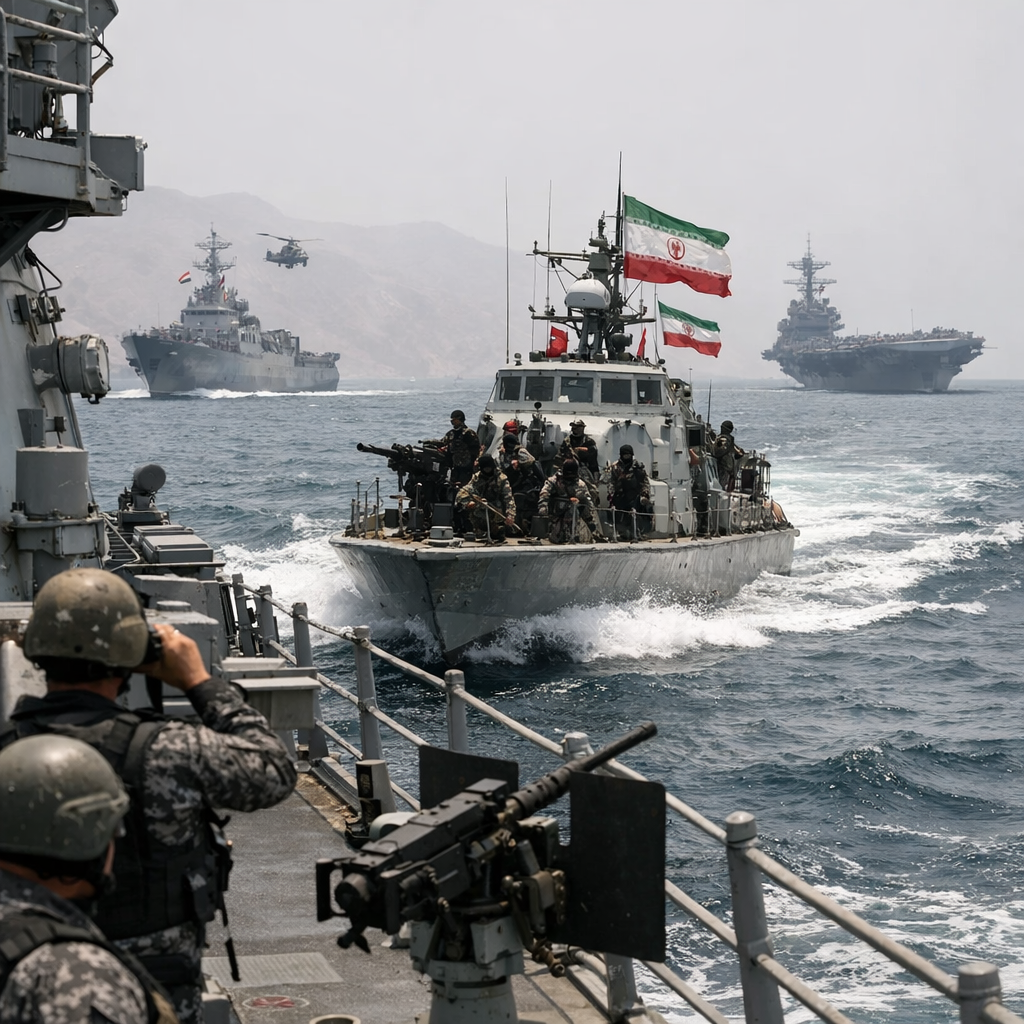
The Strait of Hormuz, a vital waterway for global oil transportation, has recently become a focal point of escalating tensions between the United States and Iran. This strategic chokepoint has witnessed a series of confrontations that have raised concerns about regional stability and international security.
Background of the Conflict
Reports indicate that Washington and Tehran were nearing a one-page agreement aimed at ending their prolonged conflict. However, the situation took a turn when both sides engaged in their first deadly military clash over the Strait of Hormuz since reaching a ceasefire in early April. This escalation underscores the fragile nature of the peace process and the deep-seated mistrust between the two nations.
Strategic Importance of the Strait
The Strait of Hormuz is considered Iran’s most significant leverage in its conflict with the United States. Controlling this narrow passage allows Iran to influence global oil markets and assert its geopolitical stance. The current escalation is primarily driven by the United States’ pursuit of a containment strategy aimed at forcing Iran to retreat from or compromise on its positions.
Implications for Global Peace
These sporadic incidents reveal the profound divisions between the United States and Iran, dimming the prospects for a genuine return to peace in the region. The recent clashes over the Strait of Hormuz have not escalated into a full-scale war, but they highlight the deep mistrust and divisions between the two nations, complicating diplomatic efforts and potentially leading to prolonged regional chaos.
Conclusion
As the United States and Iran navigate this complex and volatile situation, the international community remains watchful. The outcome of this standoff will have far-reaching implications for global peace and security, emphasizing the need for sustained diplomatic engagement and conflict resolution strategies.